
What is Play Based Speech Therapy?
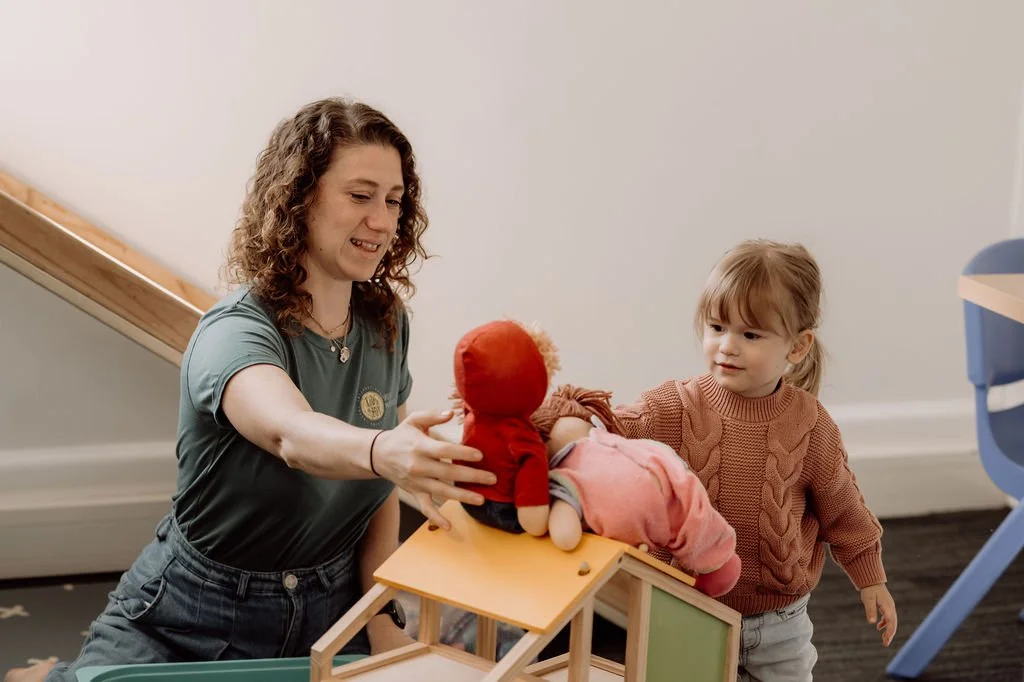
Play based speech therapy is an evidence-based approach to supporting children with communication delays or disorders through the power of play. This approach recognises that children learn best when they are actively engaged, relaxed, and enjoying themselves.
Play is how children explore their world, build relationships, practise new skills, and express themselves. Through play, children experiment, take risks, solve problems, and learn how communication works in real-life situations. Because of this, speech therapy for kids is most effective and meaningful when it is grounded in play.
Play based speech therapy provides a safe, supportive environment where children feel comfortable trying new words, sounds, and social skills without fear of getting things “wrong”. Research consistently shows that play is one of the most powerful ways children acquire new skills and knowledge, making it an ideal foundation for speech and language intervention. Importantly, it also creates a positive and enjoyable experience for both children and parents.
What Does Play Based Speech Therapy Look Like?
Fun! Play based speech therapy uses games, pretend play, role play, crafts, books, movement, and interactive activities to engage children and help them achieve their communication goals. While sessions are carefully planned and goal-driven, they are designed to feel like playtime rather than “work”.
Each session is tailored to the child’s interests, developmental level, and specific communication needs. This keeps children motivated and helps them practise skills in ways that feel natural and meaningful.
Play based speech therapy might look like:
Playing with a doll’s house to help a child understand and use prepositions (e.g. in the house, on the table, behind the sofa)
Following spoken instructions to complete a craft activity (e.g. first cut out the square, then fold it in half)
Playing with a doctor’s kit to learn and practise the names of body parts
A shopping game to support understanding of categories (e.g. fruit, vegetables, dairy, meat) and describing items (e.g. a big, yellow banana)
Playing with a farm set to practise action words (e.g. feed the animals, drive the tractor)
Going on a scavenger hunt to find objects that start with a particular sound to practise speech sounds
Reading books together that target specific sounds, vocabulary, or sentence structures
These activities allow children to practise speech and language skills in context, helping them transfer what they learn in therapy to everyday life. This is one of the reasons play based speech therapy is so effective for long-term progress.
Who Is Play Based Speech Therapy For?
Everyone! Playfulness is a central part of being a child, and even adults benefit from learning through play. Many parents enjoy being involved in play-based sessions, as it creates opportunities for meaningful interaction and helps them learn strategies they can use at home.
While younger children naturally respond to play more than older children or teenagers, play based approaches can be adapted for all ages. With the right activities and interests, almost everyone enjoys play in some form.
Play based speech therapy is particularly powerful for neurodiverse children, including autistic children and those with developmental differences. These children often learn best in low-pressure, interest-based environments where they feel safe and understood.
This approach:
Follows the child’s lead while still targeting specific goals
Uses the child’s interests to build motivation and engagement
Provides predictable structure within fun, flexible activities
Allows children to progress at their own pace
Because sessions are personalised, goal-driven, and enjoyable, children are more likely to build meaningful communication skills that last.
Why Does Play Based Speech Therapy Work?
Play based speech therapy works because play is a child’s natural language. Before children can explain their thoughts or feelings with words, they express themselves through play. It is how they learn about relationships, emotions, rules, and communication. Play based speech therapy also supports the whole child, not just their speech. It builds social connection, emotional wellbeing, and a positive attitude toward learning — all of which are essential for healthy development.
Through play, children:
Learn how to take turns and share attention
Practise understanding and using language
Develop problem-solving and thinking skills
Build emotional regulation and confidence
Explore social roles and everyday situations
As children grow, their play becomes more complex, supporting the development of vocabulary, sentence structure, speech sounds, social communication, and flexible thinking. Play based speech therapy meets children where they are developmentally and builds skills in a way that feels achievable and supportive.
Importantly, play-based therapy is enjoyable. When children enjoy therapy, they are more motivated to attend, more willing to participate, and more open to trying new skills. When speech therapy for kids feels like play rather than work, children are relaxed, engaged, and confident.
This positive emotional experience helps build trust between the child and the therapist, encourages consistency, and supports better outcomes over time. Children who enjoy their sessions are genuinely happy to come to therapy, which makes a meaningful difference to progress.
What Does the Research Say?
Research consistently shows that play based speech therapy is an effective approach for supporting children’s communication development. Children learn best when they are actively engaged, emotionally regulated, and interested in what they are doing — all of which are naturally supported through play.
Studies have found that children are more likely to retain and generalise skills when learning happens in meaningful, functional contexts. By embedding therapy goals into play, children practise skills repeatedly in ways that mirror real-life communication. This leads to:
Stronger learning
Better carryover into everyday situations
Increased confidence using communication skills
More sustainable, long-term progress
Play based speech therapy is a powerful, evidence-based approach that supports children to learn, communicate, and grow through activities they love. By combining fun, structure, and personalised goals, it makes speech therapy for kids engaging, meaningful, and effective.
When therapy feels like play, children are happy to attend, motivated to participate, and confident to try new skills, creating the best possible foundation for communication success.
