
Children’s Speech Therapy in Rose Bay, Sydney
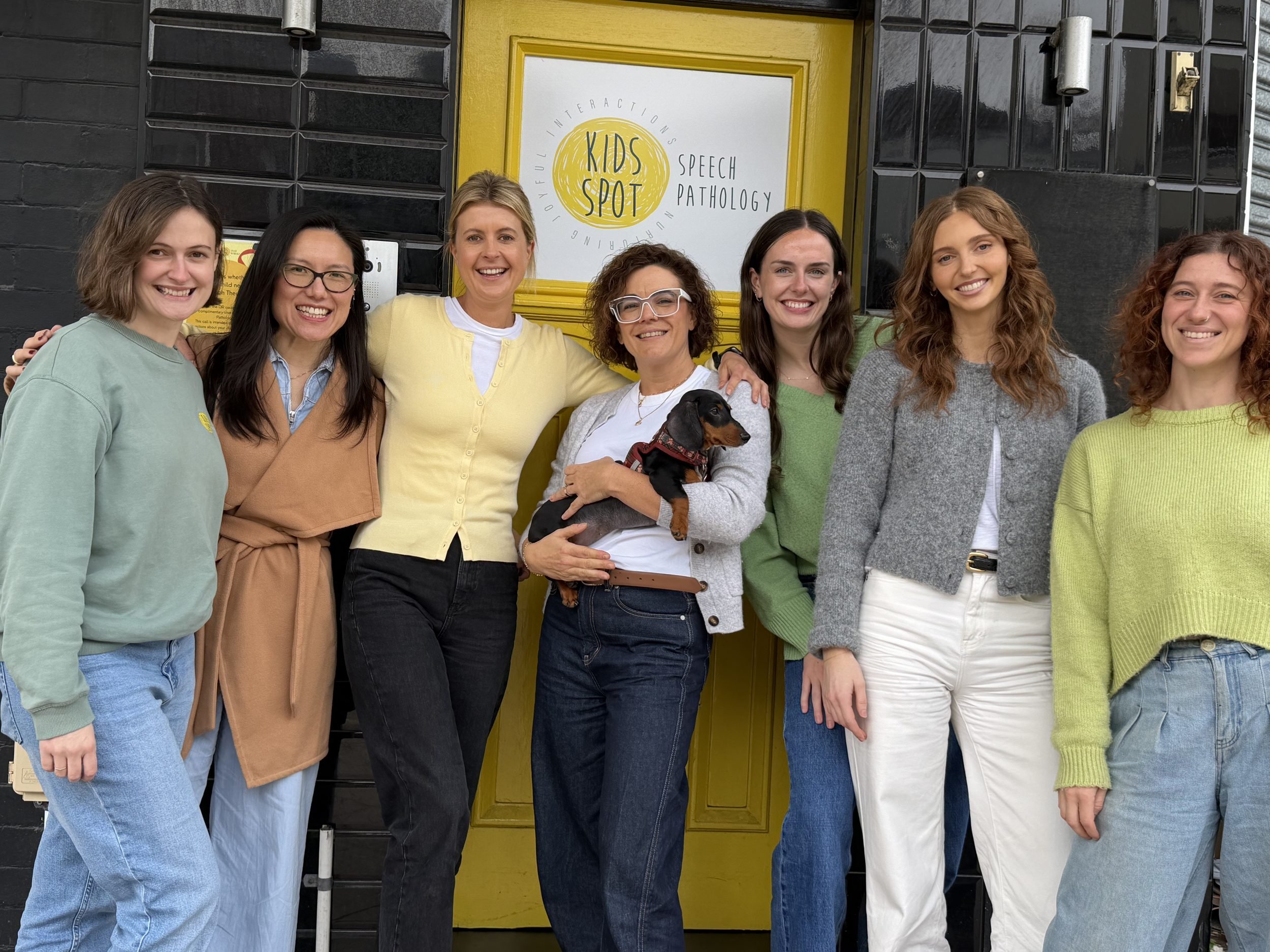
Kids Spot is a speech pathology clinic in Rose Bay, caring for children and families since 2005.
We are family-owned and led by our Director, Julia Orsini.
We help children aged 0-16 years with communication and feeding difficulties in our clinic, in local schools and preschools and via Telehealth.
No referral is needed to start your journey.
To book an appointment call us on (02) 9371 0324
If you’re unsure if your child needs Speech Pathology, you can book a free discovery call and chat to our Director, Julia Orsini using the link on the top right
We Nurture Joyful Interactions



How do I know if my child needs speech therapy?
Our speech pathology clinic understands that every child develops at a different pace, and we also understand that kids have different needs. Communication milestones can be a good marker of your child's current skills and whether they need support. Research shows that the sooner that challenges are identified and treated, the better the outcomes for learning into the future. Click below for more information about communication milestones and determine if speech therapy for kids can help your child reach their full potential.
-
By 1 year of age, the child should be able to:
respond to familiar sounds e.g. telephone ringing or the car in the driveway
understand simple commands, such as "no" and “come”
respond to / turn to their name being called
look for familiar objects or people when asked
say "dad", "mumma" and a few other words
try to make familiar sounds, such as a car and animal noises
By 2 years of age, the child should be:
achieving all the above and…
using a vocabulary of at least 50 words
starting to use simple 2 word phrases e.g. “go park” or “mumma milk”
listening to stories & naming pictures
understanding simple questions, such as "where's your shoe?" (looks for the shoe)
following simple instructions e.g. “get your nappy” or “give me the ball” (from a set of other toys)
talking to themselves or their toys during play
using toys in range of ways
-
By 3 years of age, the child should be:
achieving all the above and…
be understood 50% of the time by those not in frequent contact with them (e.g. family or friends not seen often, doctor, shopkeeper, librarian etc.)
understanding how objects are used e.g. a crayon is something to draw with
communicating their needs and wants using words/sentences
following 2 part instructions e.g. “get your shoes and bag” (without gestures)
use three to four word sentences e.g. "we go park mummy"
begin to use basic grammar such as “we went to park”
enjoy telling stories and asking questions
have favourite books
By 4 years of age the child should be:
achieving all the above and…
be understood 75% of the time by 5 years of age
understanding shapes and colour names e.g. "show me the..."
understanding some "time" words e.g. "lunch time" OR "today"
asking who, what and why questions
using lots of words, about 900, usually in four to five word sentences
using correct grammar with occasional mistakes, such as "I falled down"
using language when playing with other children
By 5 years of age, the child should be:
achieving all the above and…
understood 100% of the time by everyone
using sentences with about six words using correct grammar
talking about events which are happening, have happened or might happen
explaining why something happens, such as "Mum's car stopped because the petrol ran out"
following three-part instructions, for example, "pack away the toys, put your shoes on and wait by the door"
saying how they feel and tell you their ideas
interested in writing, numbers and starting to read things
-
By 5 years of age, the child should be:
achieving all the above and…
understood 100% of the time by everyone
using sentences of about six words with correct grammar
talking about events which are happening, have happened or might happen
explaining why something happens, such as "Mum's car stopped because the petrol ran out"
following three-part instructions, for example, "pack away the toys, put your shoes on and wait by the door"
saying how they feel and tell you their ideas
interested in writing, numbers and starting to read things
-
By 7 years of age, the child should be:
achieving all the above and…
have all needs and wants met through a range of communication skills
beginning to read simple sentence or greater (even short books)
make and maintain friendships
explain how to play a game
follow along in a game explained by someone else
tell / write stories or information
write with mostly accurate spelling
Above the age of 7 years, the child should be:
achieving all the above and…
developing reading skills every year
be able to read and comprehend a range of texts (stories, information text etc)
be able to write a range fo texts with correct structure, grammar and spelling.
able to communicate to solve problems that arise in friendships
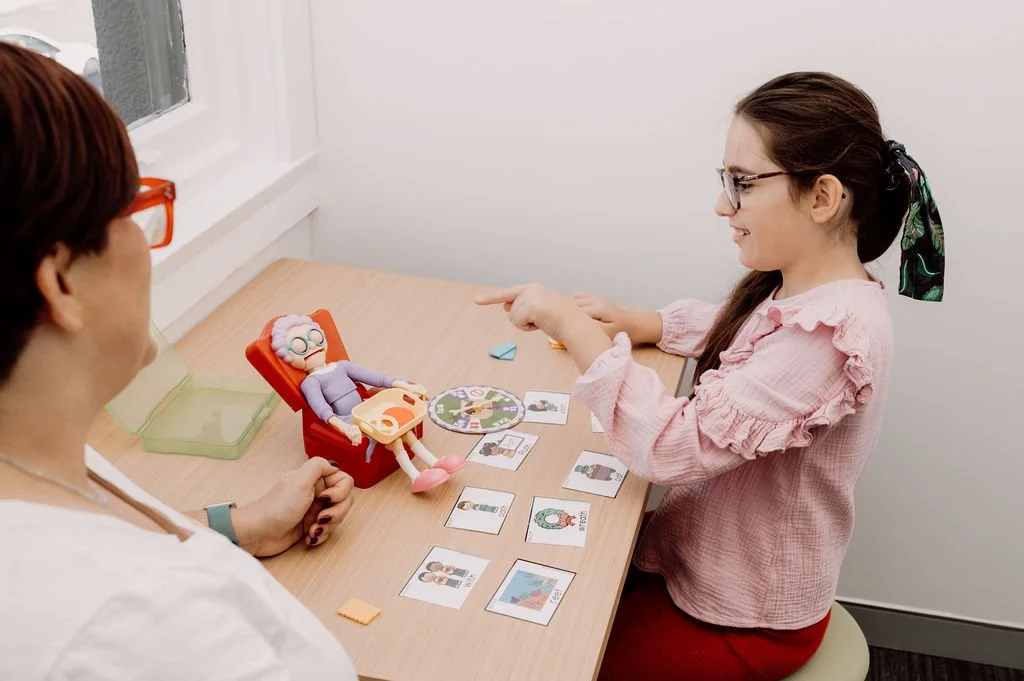
Our approach is always play-based and child led
This means that we use your child’s interests and follow their lead as part of the therapy process at our speech pathology clinic in Rose Bay. It also means we are meeting your child at their developmental level and helping them to move towards achieving milestones.
We often see children running towards their Speech Pathologist and the play room to see what’s in store.
Our families are active participants in the play that occurs in our sessions. We believe you are your child’s most important teacher and advocate.
We develop goals alongside you so you are an integral part of the journey and your child’s success.
How Kids Spot are different
We are passionate about community engagement and inclusion
We work with all professionals involved in your child’s care so they are supported in all aspects of their life. This helps children reach their full potential because everyone knows how best to support them.
We believe that all behaviour is a response
This can include responses such as: biting, pulling hair, repetitive movements, tantrums, meltdowns, etc.
We are always working with you to identify what might be contributing to a response and how we can best support your child with these responses.
We celebrate your child and acknowledge them for who they are in every session of our speech therapy for kids.
We are passionate about Neurodiverse affirming practice.
Your journey with us generally starts with an assessment appointment but if you have already had an assessment, we can use this information to start therapy sessions.
I would like more information about…
How we work


Did you know we also offer Professional Development for your team?
Support your child's communication development with Kids Spot
At Kids Spot, we are dedicated to fostering the development of essential communication skills through specialised speech therapy for kids. If you're noticing your child lagging behind the milestones mentioned or if you have any concerns about their communication development, don't wait. Early intervention is key to effective progress and long-term success.
Not sure when to see us? Learn more about the signs that indicate it might be time to consider professional help. At our speech pathology clinic in Rose Bay, we're committed to providing personalised and impactful support for each child, helping them unlock their full potential through playful, goal-driven therapy.
Don't hesitate to take that first step towards a brighter, more communicative future for your child. Rest assured, our team is here to guide and support you every step of the way.
FAQs
-
Speech pathology for kids focuses on assessing, diagnosing and treating communication disorders, including speech, language and swallowing difficulties. Through personalised therapeutic strategies, it aims to help children improve their ability to communicate effectively and meet developmental milestones.
-
The best age for speech therapy is when a delay or disorder is noticed. Early intervention, often starting from infancy, can significantly improve outcomes. However, speech therapy can be beneficial at any age as children grow, and their communication needs evolve.
-
A speech pathologist is crucial when a child shows signs of difficulty in communicating, understanding others or using language appropriately for their age. They provide specialised support to help overcome these challenges, ensuring your child can express themselves clearly and interact effectively with others.
-
We use a combination of play-based therapy, relationship-focused interaction (called DIR Floortime), and support for children who learn language in chunks (called gestalt language processing). This approach is gentle, respectful, and tailored to each child’s unique way of learning and communicating.
Here’s how it helps:
1. Play-Based Therapy
Children learn best through play. It’s how they explore the world and connect with others.
Play makes learning fun and natural. Instead of asking children to sit still and follow instructions, we follow their lead and join in their interests.
It encourages real communication. When children are playing, they have real reasons to communicate—like asking for a toy, sharing excitement, or solving a problem.
2. Building Connection Through Relationships (DIR Floortime)
We focus on connection first. Children learn best when they feel safe, connected, and understood.
We meet children where they are. Every child is different. We adjust to their level and work at their pace.
We support their sensory needs. Some children are sensitive to sound, touch, or movement. We respect those needs and help them feel calm and in control.
We help them grow step by step. Instead of pushing for quick results, we build important skills like taking turns, problem-solving, and understanding others over time.
3. Supporting Children Who Learn Language in Chunks (Gestalt Language Processing)
Some children learn language by repeating phrases they’ve heard. This is completely normal and meaningful—it’s often the first step in their language development.
We don’t try to stop this. Instead, we work with it, helping them move from long phrases (like movie quotes or repeated scripts) to more flexible and meaningful language.
We help them learn to build their own sentences. Over time, we support children to break down those chunks and use words in new ways to express themselves.
Why This Approach Works
It’s gentle and respectful—we don’t force or pressure.
It helps children feel safe, understood, and connected.
It supports real communication, not just repeating words or copying behaviours.
It builds the foundation for stronger relationships, better communication, and more confidence.


